
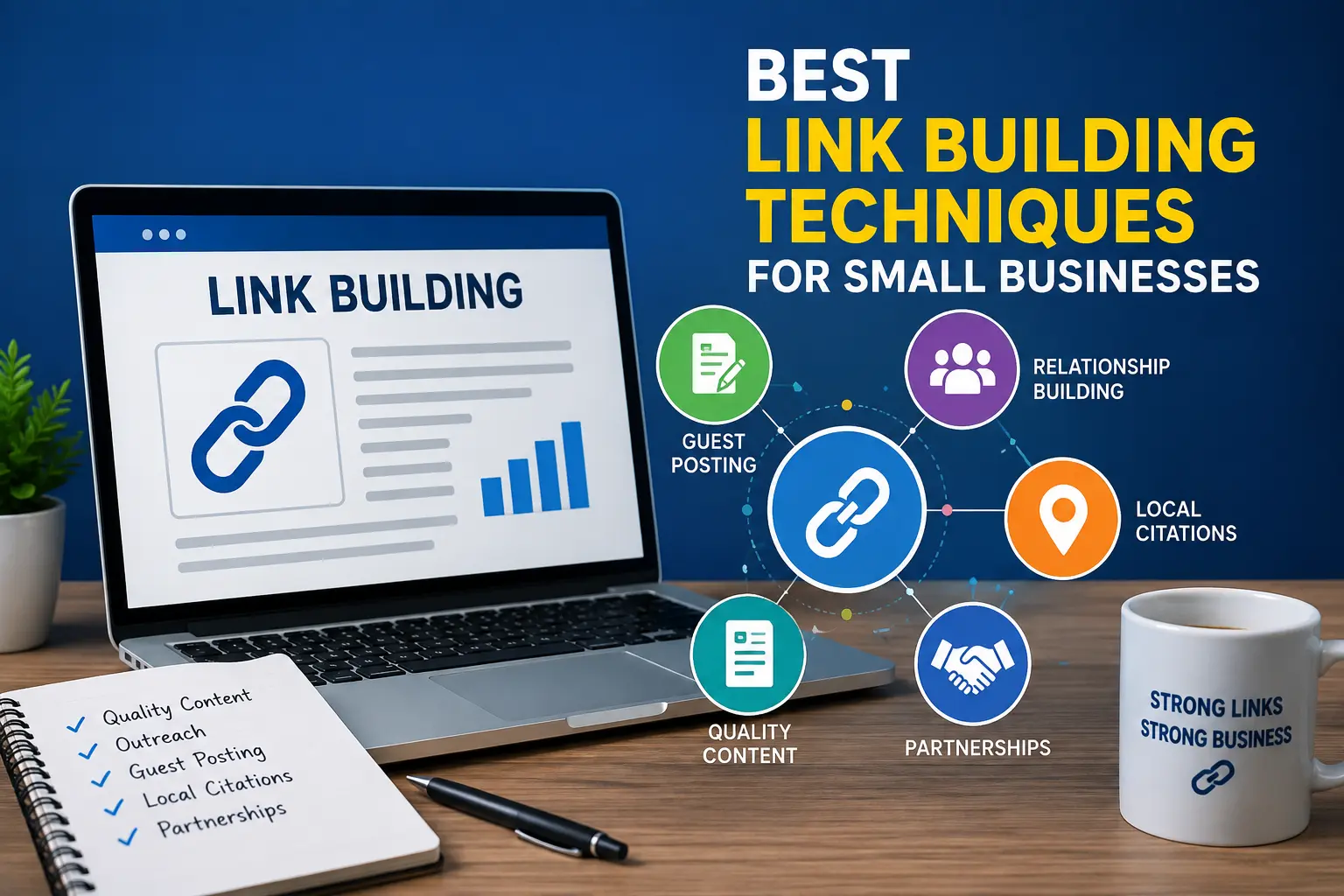
Small businesses often assume that link building is a game reserved for big brands with big budgets. That assumption costs them traffic, rankings, and revenue every single day. The truth is that the right link building techniques can help a local bakery, a plumbing company, or a boutique consultancy outrank national chains in search results — without spending a fortune. This guide walks through the most effective, budget-friendly, and sustainable link building techniques that small business owners can start using this week.
Whether you run an HVAC company, a Shopify store, or a professional services firm, the link building techniques in this article are designed to be practical. No fluff, no theory-only advice — just proven link building techniques you can put into action, along with the reasoning behind why each one works.
What Is Link Building and Why Does It Matter?
Link building is the process of earning hyperlinks from other websites back to your own. Search engines like Google treat these links as votes of confidence: the more relevant, high-quality sites that link to you, the more trustworthy and authoritative your website appears. That’s why link building techniques remain one of the three biggest ranking factors in modern SEO, alongside content quality and technical health.
For small businesses, mastering link building techniques is not optional — it’s foundational. Without backlinks, even beautifully written content and a fast website can struggle to rank above competitors with stronger link profiles. If you’ve already worked on keyword research for your local business, link building is the next logical step because it amplifies the visibility of everything you’ve already optimized.
Why Small Businesses Need Link Building Techniques More Than Ever
Search competition has changed. Local directories, national aggregators, and well-funded competitors are all fighting for the same keywords small businesses depend on. Effective link building techniques level the playing field by signaling to Google that a small, independent business is just as trustworthy — sometimes more so — than a larger competitor with a weaker backlink profile.
Here’s why link building techniques deserve a place in every small business marketing plan:
- Improved rankings — Pages with strong backlink profiles consistently outrank pages without them, even when on-page SEO is similar.
- Referral traffic — Beyond rankings, links from relevant sites send real visitors who are already interested in your niche.
- Brand credibility — Being mentioned and linked to by respected sites builds trust with both search engines and potential customers.
- Faster indexing — New pages get discovered and indexed faster when they’re linked from established websites.
- Long-term compounding value — Unlike paid ads, backlinks built through smart link building techniques keep delivering value for years.
If your business has already invested in on-page optimization and local SEO, link building techniques are what turn that groundwork into visible rankings.
Link Building Techniques vs. Link Buying: Know the Difference
Before diving into specific link building techniques, it’s important to separate legitimate strategies from risky shortcuts. Buying links in bulk, joining private blog networks, or using automated link-spinning software might promise fast results, but they violate search engine guidelines and can trigger penalties that erase years of organic growth. The link building techniques covered in this article are all white-hat, sustainable, and designed to build real relationships and real authority — the kind that survives algorithm updates.
1. Guest Posting on Relevant Industry Blogs
Guest posting remains one of the most reliable link building techniques available to small businesses. The process involves writing valuable, original content for another website in your industry in exchange for a byline link back to your site.
To make this one of your most productive link building techniques:
- Target blogs with genuine relevance to your niche, not just high domain authority.
- Pitch specific, well-researched topic ideas rather than generic offers.
- Write content that would be valuable even without the link — editors notice quality.
- Include a natural, contextual link within the body, not just an author bio link.
Guest posting works because it combines content marketing with outreach, making it one of the few link building techniques that also builds your reputation as an industry expert.
2. Broken Link Building
Broken link building is a classic among link building techniques because it provides real value to webmasters while earning you a backlink. The technique works like this:
- Find broken (404) links on relevant websites using a crawling tool.
- Create or identify a piece of content on your site that could replace the broken resource.
- Reach out to the site owner, point out the broken link, and suggest your page as a replacement.
Because you’re helping the webmaster fix an actual problem, response rates for this link building technique tend to be higher than cold outreach. It’s a win-win: they clean up their site, and you gain a relevant backlink.
3. Resource Page Link Building
Many websites maintain curated “resources” or “useful links” pages for their audience. Getting listed here is one of the more scalable link building techniques because these pages are often actively looking for new additions.
To succeed with resource page link building techniques:
- Search for phrases like “resources,” “helpful links,” or “useful tools” combined with your industry keyword.
- Confirm the page is still updated and not abandoned.
- Reach out with a short, specific pitch explaining why your resource fits their list.
This is one of the simpler link building techniques to execute at scale, especially for niche industries with active community pages.
4. HARO and Journalist Outreach
Help a Reporter Out (HARO) and similar journalist-outreach platforms connect small business owners with reporters seeking expert quotes. This has become one of the most respected link building techniques because it results in links from major news outlets and industry publications.
To make journalist outreach one of your go-to link building techniques:
- Respond quickly — reporters work on tight deadlines.
- Keep your pitch concise, credentialed, and quotable.
- Include a short bio with a link to your website.
Even a handful of successful placements per month can make this one of the highest-authority link building techniques in your toolkit.
5. Local Business Directories and Citations
For small businesses, local link building techniques are just as important as national ones. Getting listed in reputable local directories, chambers of commerce, and industry associations builds both backlinks and local SEO signals simultaneously.
Effective local link building techniques include:
- Claiming and optimizing your Google Business Profile listing.
- Submitting your business to niche-specific directories relevant to your industry.
- Joining local chamber of commerce and business association websites.
- Sponsoring local events or charities that list sponsors with a backlink.
If you haven’t already reviewed your Google Business Profile setup, pairing that optimization with local directory link building techniques multiplies your visibility in the map pack and organic results together.
6. Competitor Backlink Analysis
One of the most efficient link building techniques is simply studying where your competitors are already getting links. Using a backlink analysis tool, you can uncover:
- Guest posting opportunities your competitors have already used.
- Directories and resource pages that link to similar businesses.
- Industry publications open to covering companies like yours.
This approach turns competitor research into one of the most time-efficient link building techniques because you’re not guessing — you’re following a proven trail.
7. The Skyscraper Technique
The skyscraper technique is a content-driven link building strategy that involves finding a popular piece of content in your niche, creating something significantly better, and then reaching out to everyone who linked to the original asking them to link to your improved version instead.
This is one of the more advanced link building techniques because it requires strong content creation skills, but it can generate dozens of backlinks from a single well-executed campaign. Combine this with keyword research for local businesses to identify topics with genuine linking potential before you invest the time.
8. Creating Linkable Assets
Certain types of content naturally attract backlinks without extensive outreach. Building these “linkable assets” is one of the most sustainable long-term link building techniques because the content keeps earning links passively over time. Examples include:
- Original research, surveys, or industry data reports.
- Free tools, calculators, or templates.
- Comprehensive guides that become the definitive resource on a topic.
- Infographics that visually explain complex processes.
Small businesses that invest in one strong linkable asset per quarter often find it outperforms months of manual outreach — making this one of the highest-ROI link building techniques available.
9. Unlinked Brand Mention Reclamation
Your business may already be mentioned across the web without a link attached. Finding and converting these unlinked mentions into backlinks is one of the fastest link building techniques because the relationship and context already exist — you’re simply asking the site to add a link to a mention that’s already there.
Set up alerts for your brand name and reach out politely whenever you spot an unlinked mention. This link building technique often has one of the highest success rates because you’re not asking for a favor from scratch.
10. Digital PR and Newsworthy Campaigns
Digital PR has become one of the most powerful link building techniques for small businesses willing to think creatively. By creating a newsworthy angle — a local milestone, a data study, a community initiative — and pitching it to journalists and bloggers, you can earn links from high-authority publications that would otherwise be out of reach.
Digital PR link building techniques work best when:
- The story ties into a trending topic or seasonal event.
- You provide genuinely useful data, not just a sales pitch.
- You target publications your actual customers read, not just high-authority sites in general.
11. Supplier, Partner, and Sponsorship Links
Every small business has a network of suppliers, partners, and vendors — and many of these relationships come with untapped linking opportunities. Ask suppliers if they maintain a “customers” or “partners” page, and offer to do the same in return.
These relationship-based link building techniques are underused by small businesses but tend to convert extremely well, since the relationship already exists and the link request feels natural rather than transactional.
12. Guest Appearances on Podcasts and Webinars
Podcast and webinar guesting has emerged as one of the more modern link building techniques, especially as audio and video content consumption grows. Hosts typically link back to guests in their show notes, giving you a relevant backlink along with exposure to a new audience.
To make podcast guesting one of your recurring link building techniques, pitch hosts in your industry with a specific angle or story, not just a generic “have me on your show” request.
13. Testimonials and Case Study Link Building
Offering a genuine testimonial for a tool, service, or vendor you actually use is one of the easiest link building techniques to execute. Many companies feature customer testimonials on dedicated pages, often with a link back to the customer’s website.
This technique works particularly well for small businesses because:
- It requires no cold outreach — you already have the relationship.
- The link typically comes from a commercial page with decent authority.
- It positions your brand alongside other reputable companies.
14. Community and Forum Engagement
Participating genuinely in industry forums, Reddit communities, and Q&A platforms like Quora can support your broader link building techniques when done correctly. While many of these platforms use “nofollow” links that don’t pass direct ranking value, the referral traffic and brand visibility often lead to natural links from people who discover your business through these communities.
Avoid spammy, link-only comments — search engines and communities both penalize this behavior, undermining your other link building techniques in the process.
15. Scholarship and Sponsorship Link Building
Offering a small scholarship to students, in exchange for a link from university financial aid resource pages, has long been one of the more debated link building techniques. When done authentically — with a real scholarship, real recipients, and no manipulative intent — it can still be effective, particularly for businesses with a genuine connection to education or local community development.
16. Internal Linking: The Overlooked Companion to External Link Building Techniques
While most link building techniques focus on earning links from other websites, internal linking deserves equal attention. Every time you publish new content, link it naturally to other relevant pages on your own site. This helps search engines understand your site structure, spreads authority earned from external backlinks throughout your website, and keeps visitors engaged longer.
For example, if you’re writing about link building techniques, you might link internally to related resources like a guide on keyword research for local businesses, an overview of local SEO strategy for small businesses, or a piece on Google Search Console for tracking the results of your link building campaigns. If you serve a specific trade, industry-focused pages such as HVAC SEO strategies or appliance repair SEO can also benefit from links pointing to your core link building resource, creating a web of topical relevance across your site.
Strong internal linking ensures that the authority you build through external link building techniques doesn’t stay trapped on a single page — it flows throughout your entire website.
A Real-World Example of Link Building Techniques in Action
To see how these link building techniques work together rather than in isolation, imagine a small independent HVAC company trying to compete against national franchise brands in local search results. On its own, none of the sixteen link building techniques above would be enough to move the needle quickly. Combined, they create momentum.
The business starts with the fundamentals: claiming directory listings, requesting testimonials from vendors, and reclaiming a few unlinked brand mentions found through a simple brand-monitoring search. Within a month, this foundational round of link building techniques produces a dozen new, low-effort backlinks. From there, the company invests in one linkable asset — a seasonal maintenance checklist tool — and pitches it to local resource pages and home-improvement blogs using the resource page link building techniques covered earlier. A few of those outreach emails also lead to guest posting opportunities on regional trade publications.
By month four, a HARO pitch about rising energy costs earns the company a quote and a link in a well-known consumer publication. By month six, its competitor backlink analysis reveals a broken link building opportunity on an industry association page, which converts into another high-authority backlink. None of these individual link building techniques felt dramatic on their own, but stacked together over six months, they produced a backlink profile strong enough to outrank several larger competitors for its most valuable local keywords.
This is the pattern worth remembering: link building techniques rarely work as isolated tactics. They work as a system, where the results of one technique — a resource page listing, a piece of digital PR coverage, a reclaimed mention — feed into and strengthen the next.
How to Prioritize Link Building Techniques With a Limited Budget
Not every small business can execute all sixteen link building techniques at once. Here’s a simple framework for prioritizing:
- Start with low-cost, high-relationship techniques — testimonials, supplier links, and unlinked mention reclamation cost little more than time.
- Invest in one linkable asset per quarter — this compounds over time and reduces reliance on manual outreach.
- Layer in local link building techniques — directories and chamber of commerce listings are quick wins for local visibility.
- Reserve guest posting and digital PR for months with more bandwidth — these link building techniques require more research and writing time but deliver higher-authority results.
Common Mistakes Small Businesses Make With Link Building Techniques
Even well-intentioned link building techniques can backfire if executed poorly. Watch out for these common mistakes:
- Chasing quantity over quality. A handful of relevant, authoritative backlinks outperform hundreds of low-quality directory links.
- Ignoring relevance. A link from an unrelated industry site provides far less value than one from a site your actual customers visit.
- Over-optimizing anchor text. Repeating your exact keyword phrase in every link looks unnatural to search engines and can trigger penalties.
- Neglecting outreach personalization. Generic, templated outreach emails have dramatically lower response rates than personalized pitches.
- Forgetting to track results. Without monitoring your backlink profile, it’s impossible to know which link building techniques are actually working.
Measuring the Success of Your Link Building Techniques
Once you’ve implemented several link building techniques, tracking their impact is essential. Key metrics to monitor include:
- Referring domains — the number of unique websites linking to you, which matters more than raw link count.
- Organic traffic growth — increases in search traffic to pages that received new backlinks.
- Keyword ranking improvements — movement in rankings for target keywords tied to newly linked pages.
- Domain authority or similar metrics — third-party scores that estimate overall site strength.
- Referral traffic — direct visits coming from the linking pages themselves.
Reviewing these metrics monthly helps you understand which link building techniques deserve more investment and which should be deprioritized.
Outsourcing Link Building Techniques: When It Makes Sense
Not every small business has the time or in-house expertise to execute link building techniques consistently. In these cases, working with an experienced digital marketing partner can help. Agencies that specialize in local SEO services or broader SEO and digital marketing services often have existing relationships with publishers and a proven outreach process, which can accelerate results compared to starting from scratch. If your business also needs supporting work like content writing to fuel guest posts and linkable assets, or ongoing website maintenance and technical support to keep your site healthy while it earns new links, pairing link building techniques with these complementary services can produce faster, more consistent results.
Combining Link Building Techniques With Technical SEO
Link building techniques work best when your website’s technical foundation can support the authority you’re earning. A slow, poorly structured, or hard-to-crawl website wastes the value of every new backlink. Before investing heavily in link building techniques, make sure your site loads quickly — reviewing website speed and Core Web Vitals is a good starting point — and that your pages are properly indexed and error-free.
If your site was built on WordPress, working with a developer familiar with WordPress web design or a specialist offering WordPress website development support can ensure that the technical side of your site never undermines the results of your link building techniques.
A Realistic Timeline for Link Building Techniques
Link building techniques are not a quick fix. Most small businesses should expect:
- Months 1–2: Foundation building — directories, citations, testimonials, and unlinked mention reclamation.
- Months 3–4: First outreach campaigns — broken link building, resource page outreach, and initial guest posts.
- Months 5–6: Linkable asset development and digital PR campaigns begin generating momentum.
- Months 6+: Compounding results — as your backlink profile grows, each new piece of content earns links faster due to increased domain authority.
Patience is the key ingredient. Link building techniques that promise overnight results are almost always the risky, penalty-prone shortcuts mentioned earlier in this guide.
Frequently Asked Questions About Link Building Techniques
How many backlinks does a small business actually need? There’s no universal number. What matters more than volume is relevance and authority. A handful of well-placed, relevant backlinks from respected sites in your industry will outperform hundreds of generic directory links.
Are paid links ever safe to use? Paid links that violate search engine guidelines carry real risk, including manual penalties. The link building techniques outlined in this article focus on earned, relationship-based, and content-driven links instead.
How long do link building techniques take to show results? Most small businesses start seeing measurable ranking improvements within three to six months of consistent effort, though timelines vary based on competition and starting domain authority.
Can I do link building techniques myself, or do I need an agency? Many of the techniques above — testimonials, directory submissions, unlinked mention reclamation — are approachable for business owners with a few hours a week. More complex techniques like digital PR and large-scale guest posting campaigns often benefit from professional support.
Which link building techniques should a brand-new website start with first? Newer websites should generally start with the lowest-risk, relationship-based link building techniques: local directory listings, supplier and partner links, and testimonials. These techniques require an established site with at least some existing content, but they don’t rely on the domain already having authority, which makes them ideal starting points before moving on to more competitive techniques like guest posting or digital PR.
Final Thoughts on Link Building Techniques for Small Businesses
Link building techniques remain one of the most effective ways for small businesses to compete against larger, better-funded competitors in search results. From broken link building and resource page outreach to digital PR and linkable assets, the sixteen link building techniques covered in this guide give you a complete toolkit to start building real authority.
The businesses that succeed with link building techniques are the ones that treat it as an ongoing relationship-building process rather than a one-time project. Start small, prioritize relevance over volume, track your results, and let your link building techniques compound over time into a genuine competitive advantage.
